Fake Soul: A Luxurious Script Handwritten Font for Premium Design
What Is Fake Soul?
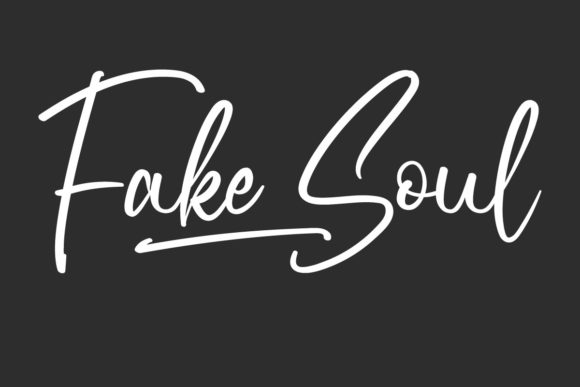
Fake Soul is a refined, professional Script Handwritten font that blends elegance with effortless flow—ideal for designers seeking sophistication without sacrificing legibility. With its smooth letterforms, subtle contrast, and confident rhythm, Fake Soul stands out in the crowded landscape of handwritten fonts. Whether you're crafting a luxury brand identity or designing wedding stationery, this font delivers immediate visual authority. If you're searching for a Fake Soul free download, know that legitimate sources offer both trial versions and full licensed access—always verify licensing before use. As a premium Script Handwritten font, Fake Soul avoids the wobbly inconsistency of many free alternatives while retaining authentic hand-drawn charm.
Letterforms with Intentional Personality
Fake Soul’s letterforms balance calligraphic flair and modern polish. Uppercase letters feature graceful entry and exit strokes; lowercase characters flow with rhythmic variation—not overly tight, not distractingly loose. Unlike generic Script Handwritten fonts that rely on heavy swashes for impact, Fake Soul achieves distinction through subtlety: tapered terminals, gentle curve modulation, and consistent x-height alignment.
Weight & Contrast That Reads Well at Scale
The font uses medium stroke contrast—not as dramatic as high-contrast scripts like Allura, but more expressive than minimalist options like Pacifico. This makes Fake Soul versatile across sizes: it holds up in large-scale posters and remains legible in mid-size social media graphics. Its weight sits comfortably between “light script” and “bold signature,” giving designers room to layer or pair without visual competition.
Spacing Optimized for Real-World Use
Kerning is thoughtfully adjusted—not overly tight (which causes crowding) nor too open (which breaks rhythm). You’ll notice how “A” and “W” sit together naturally, and how punctuation integrates cleanly. That attention to spacing is why designers consistently choose Fake Soul over less-polished free Script Handwritten fonts when precision matters.
Fake Soul for logo design
Fake Soul shines in monogram logos, boutique branding, and fashion labels where tone and texture communicate value before a word is read. Its confident slant and clean baseline make it ideal for wordmarks that need to scale from app icons to storefront signage.
Fake Soul for branding
As part of a broader visual system, Fake Soul anchors high-end packaging, email headers, and brand guidelines with warmth and authority. It pairs especially well with muted palettes and tactile textures—think linen business cards or matte-finish product labels.
Fake Soul for wedding invitations and typography
Couples and stationers love Fake Soul for save-the-dates and ceremony programs. Its restrained elegance avoids cliché while still feeling personal and intentional—unlike overly ornate scripts that age poorly or feel dated. For digital invites, it renders cleanly across devices.
Fake Soul for posters and social media
Whether promoting a gallery opening or launching a small-batch skincare line, Fake Soul adds narrative depth to typographic posters and Instagram story headers. Its rhythm guides the eye without shouting—making it a smart choice for lifestyle and creative industries.
Font Pairing & Combinations
When selecting companion fonts, consider contrast in function—not just style. What fonts pair well with Fake Soul? Start with a crisp, neutral sans-serif like Inter or Montserrat for body text: their geometric clarity balances Fake Soul’s organic movement. For editorial layouts or luxury packaging, try a low-contrast serif like Lora or Cormorant Garamond—its refined serifs echo Fake Soul’s elegance without competing. Avoid pairing with other scripts unless one is strictly decorative (e.g., a tiny ampersand or flourish). The goal is hierarchy, not harmony at all costs—and that’s exactly what makes Fake Soul font pairing so effective in practice.
Licensing & Commercial Use
Is Fake Soul free for commercial use? Not by default. Fake Soul is a premium Script Handwritten font distributed under a clear license structure: personal use is often free with attribution, but Fake Soul commercial use requires purchase of a standard or extended license. Always review the Fake Soul font license before deploying in client work, merchandise, or SaaS interfaces. Most reputable vendors—including CreativeFabrica and MyFonts—offer transparent terms, including options for unlimited projects or multi-user teams. Never assume “free download” means “free for commercial use.” When in doubt, buy the license—it’s far cheaper than a cease-and-desist.
How to Download & Use Fake Soul
To get started, look for official sources offering download Fake Soul font free trials—or full versions with commercial rights. CreativeFabrica frequently lists Fake Soul in curated font bundles, while DaFont and FontSquirrel host older or demo variants (verify license terms carefully). Once downloaded, installing Fake Soul in Photoshop or Word is straightforward: unzip, double-click the .OTF file, click “Install.” In Canva, upload it via Brand Kit (Pro required) or use it in desktop editors first, then import as PNG/SVG. How to use Fake Soul in Canva/Word/Photoshop comes down to installation discipline and format awareness—OTF supports OpenType features like ligatures, which elevate typographic finesse.
Designer Notes & Tips
Test Fake Soul in black and white first—color can mask spacing issues or weak contrast. Print a sample at 12pt to check readability in fine print. Zoom in: do terminals taper cleanly? Does the “g” sit evenly on the baseline? Compared to similar fonts like Playlist Script or Great Vibes, Fake Soul vs those options reveals tighter rhythm control and more consistent weight distribution—especially noticeable in all-caps settings. It’s less flamboyant than the former and more structured than the latter, making it a reliable middle-ground choice for designers who value craft over trend. If you’re weighing options, ask: does this font serve the message—or just decorate it? Fake Soul consistently chooses the former.